
In short
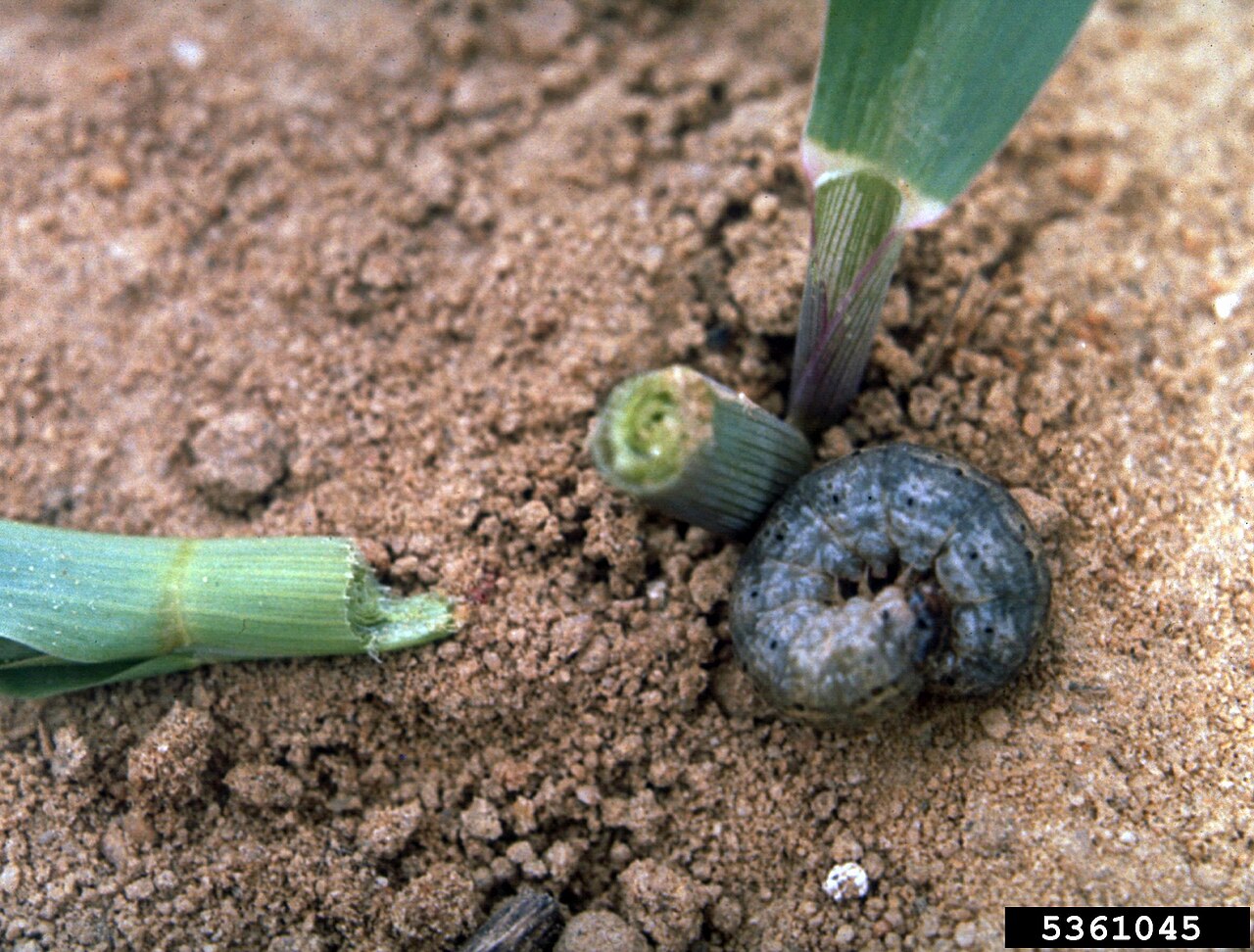
A seedling severed near soil level overnight may have been damaged by a cutworm. Confirm the pattern before treating: collapsing stems, chewing animals and mechanical damage need different responses.
A seedling severed near soil level overnight may have been damaged by a cutworm. Confirm the pattern before treating: collapsing stems, chewing animals and mechanical damage need different responses.

From the Namibian discussions
The restored collection contained a note claiming neem powder helps against cutworms, without a recorded trial or dose. Keep it as a local question worth investigating, not a proven treatment. Physical protection and careful inspection provide a practical starting point.
Check the damage and the culprit
University extension guidance describes cutworms as caterpillars that can cut young plants at or near ground level and hide nearby. Inspect around a freshly damaged plant, especially at dusk. Photograph any caterpillar without assuming every soil larva is a cutworm. A pinched, rotten stem may indicate disease instead.
Protect a small planting
- Remove damaged plants and record which rows are affected.
- Use a simple smooth-sided collar around vulnerable seedlings, with its lower edge set into the soil and room for the stem to grow.
- Check beneath and around collars so pests are not enclosed with the plant.
- Inspect frequently during the vulnerable establishment period and remove collars when no longer needed.
Make protection workable
Cardboard can be useful for a short trial but may soften after irrigation. Reused plastic must be clean, free of sharp edges and collected afterwards. Do not leave a tight loop around an enlarging stem. Protection is only worthwhile if water can still reach the roots and daily inspection remains possible.
Record what changed
Compare protected seedlings with a small comparable area only if the likely loss is affordable. Count missing plants and note night-time damage. If losses continue, ask for identification before expanding treatment. Avoid scattering unlabelled poison or household substances where birds, children or poultry can reach them.
Namibian climate and microclimate
Warm conditions can change pest activity, while irrigation concentrates growth in small attractive patches. Collars may become hot in direct sun, so inspect plant contact and choose a light-coloured or shaded design where appropriate.
Your first practical step
Protect a few newly planted seedlings and check them at dusk for several evenings. Record survival and the actual pest observed.
Keep exploring
- Critical Guide to Organic Pest Control in Southern Africa: Proven Natural Solutions for Healthier Crops
- When seedlings collapse: recognise possible damping off
Sources and further reading
Have you tried this in Namibia? Share the site conditions, method and result—including what did not work—with the Living Earth community. Local observations help the next person adapt the idea.
Worthwhile videos
Made by others, mostly outside Namibia: watch for the idea, then adapt it to our dry climate.
Watch: Beneficial Insects and Natural Enemies
Publisher: University of California IPM
Country and context: USA; California context.
A supporting lesson on beneficial insects; identify the species actually present in your Namibian garden.
The supporting lesson encourages observation of insects and their enemies; it does not demonstrate a Namibia-specific cutworm treatment.
Keep exploring
Phosphorus: make a soil-test decision
Phosphorus is essential for plants, but that does not mean every struggling garden needs more. Soil chemistry, root health and water supply influence access to nutrients.…
Critical Guide to Organic Pest Control in Southern Africa: Proven Natural Solutions for Healthier Crops
organic pest control - a ladybug eating aphids Organic pest control is a way of managing garden pests without using harmful chemicals.…
Wall spiders: observe these hunting neighbours
Flat, fast-moving spiders on walls can be surprising visitors. Learning to recognise common hunting spiders can reduce unnecessary spraying and make the home garden a bet…
Vermicompost
Vermicompost, also known as worm castings or worm compost, is a nutrient-rich organic fertilizer that is produced through the process of vermicomposting.…