
In short
A greenhouse can protect plants from cold and wind, but it can also become too hot within a short time. In a dryland garden, first decide which months and crops need enclosure. Then plan ventilation, shade and access before buying the covering.
A greenhouse can protect plants from cold and wind, but it can also become too hot within a short time. In a dryland garden, first decide which months and crops need enclosure. Then plan ventilation, shade and access before buying the covering.

From the Namibian discussions
The mailbox saved a search for a passive desert greenhouse rather than a tested local design. This guide turns that interest into a practical design brief. Passive does not mean maintenance-free, and a structure designed for a cold overseas winter may overheat in Namibia.
State the seasonal purpose
Write down whether the structure is for winter seedlings, frost-sensitive crops or year-round production. Compare it with a shadehouse or removable cover. Colorado State University’s greenhouse resources treat heating and cooling as linked decisions; enclosure should solve a defined problem.
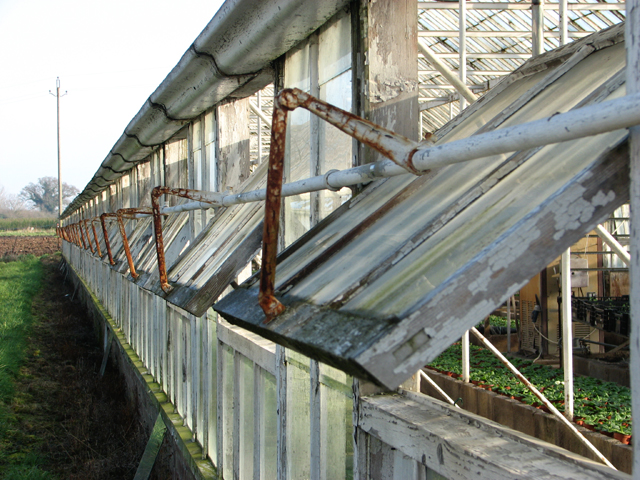
Provide a route for air
- Discuss low-level air entry and high-level warm-air exit with the designer.
- Allow for the reduced airflow caused by insect mesh.
- Make vents accessible and secure in wind.
- Plan who opens and closes them when the usual gardener is absent.
Measure where plants grow
Put suitable temperature monitoring near crop height and compare inside and outside readings. Check the warmest part of the day, not only a comfortable morning visit. Observe leaf damage, humidity and root-zone moisture. A door left ajar may be inadequate ventilation for a fully covered structure.
Budget for the actual operation
Include replacement film, repairs, water and any powered cooling. Evaporative cooling uses water and works differently at the humid coast and dry inland sites. Keep a small pilot structure manageable, and avoid promising year-round crops until the hottest and coldest periods have been observed.
Namibian climate and microclimate
Namibia combines intense sunlight with very different night temperatures and coastal humidity. Shelter that helps in winter may worsen summer heat. A seasonal removable cover may be more useful than permanent enclosure for a small household garden.
Your first practical step
List the crops and months that need protection, then compare a greenhouse, shadehouse and removable cover against that list.
Keep exploring
Sources and further reading
Have you tried this in Namibia? Share the site conditions, method and result—including what did not work—with the Living Earth community. Local observations help the next person adapt the idea.
Worthwhile videos
Made by others, mostly outside Namibia: watch for the idea, then adapt it to our dry climate.
Watch: Frost and Sun Protector
Publisher: ABC Gardening Australia
Country and context: Australia; exact filming locality not confirmed.
A removable plant-protection example. It is not a guarantee against a particular frost temperature or an enclosed-greenhouse design.
The removable-frame example illustrates seasonal flexibility. It does not provide the ventilation design for a full greenhouse.
Keep exploring
Take a useful soil sample before buying amendments
A soil report is only as useful as the sample sent to the laboratory. Combining a manure heap, a sandy path and a vegetable bed into one bag may produce an average that d…
EM (effective micro-organisms)
Effective microorganisms in action - photo by Nadia Lawton of the permaculture research institute. This is a must use resource! See their…
Before buying an avocado tree: match the plant to the site
An avocado cultivar name is only part of the buying decision. Rootstock, planting-material health, soil drainage, water quality and frost exposure can matter just as much…
Chicken manure: record nutrients, bedding and use
Chicken manure can contribute nutrients and organic matter, but one bucket is not equivalent to another. Bedding, moisture, storage and composting all change the material…