
In short
Fall armyworm can injure maize, particularly when larvae feed in the whorl of developing leaves. Early observation helps distinguish a current infestation from old damage and other causes of poor growth.
Fall armyworm can injure maize, particularly when larvae feed in the whorl of developing leaves. Early observation helps distinguish a current infestation from old damage and other causes of poor growth.
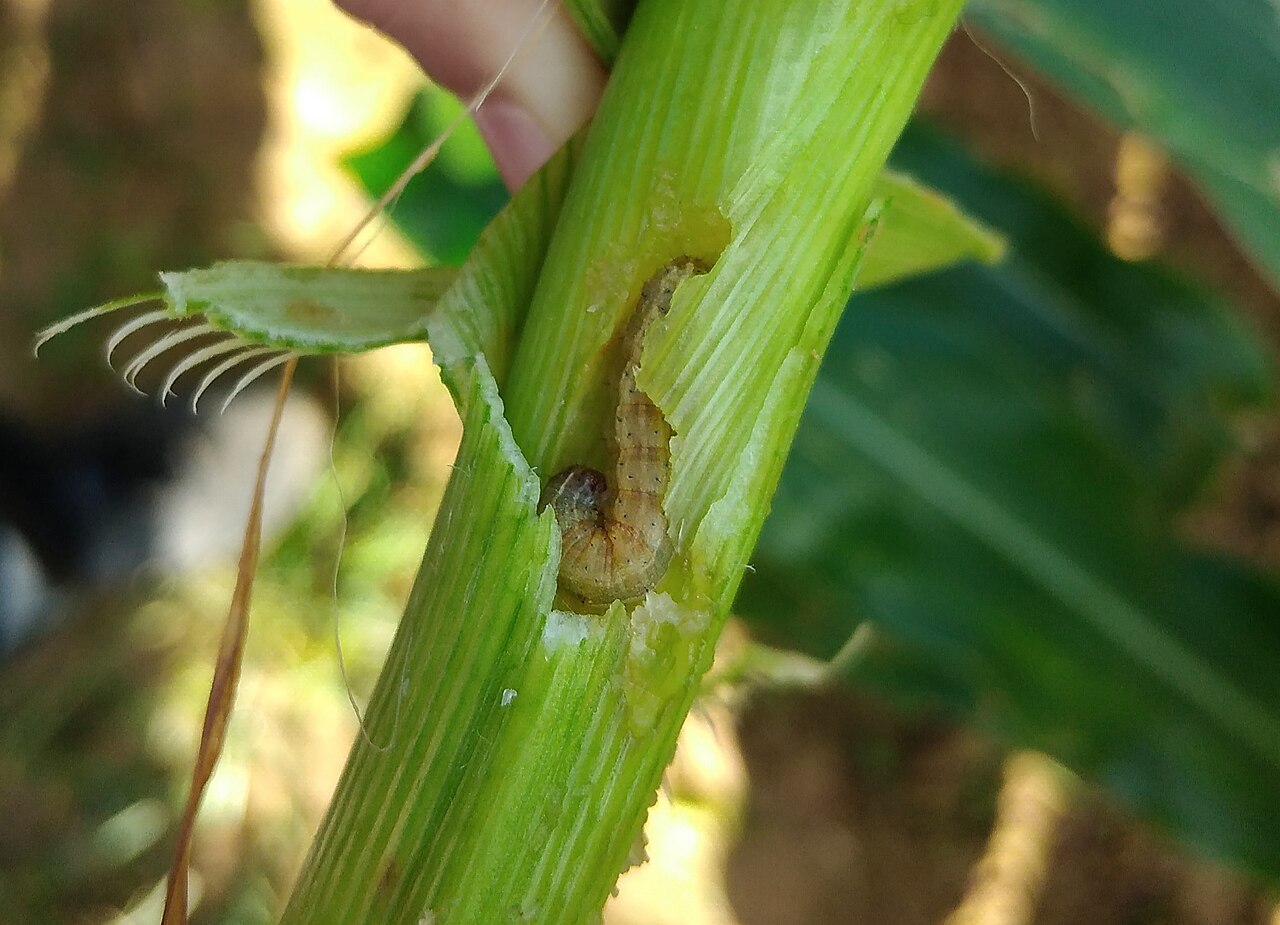

From the Namibian discussions
A Namibian discussion identified suspected fall armyworm and suggested moringa, ash or sand in the whorl. The saved exchange did not include a controlled comparison or a confirmed species record. Keep those ideas attributed, but do not present them as a proven dose or guaranteed control.
Confirm the problem
FAO’s farmer-field-school work emphasises scouting and learning in the crop. Inspect the whorl and nearby leaves for larvae and fresh feeding, and get help with identification. An injured plant may also have root damage, drought stress or more than one pest; a name suggested from one photograph does not explain every symptom.
Use a repeatable walk
- Walk through the field rather than checking only the first row. Choose plants from several positions.
- Record the number inspected, fresh damage, visible larvae and crop stage.
- Keep photographs and dates, noting rain, irrigation and any action already taken.
- Look for predators and other insect activity before choosing a whole-field response.
Decide with crop-specific advice
The appropriate response depends on crop stage, infestation and available local guidance. Ask an agricultural adviser to interpret observations and any treatment threshold. If a registered product is recommended, follow its local label and protect workers and beneficial insects. Do not copy an overseas product or concentration from a video.
Learn from local experiments without losing the comparison
If an adviser supports a low-risk trial, compare similar areas and change one factor at a time. Count fresh injury and usable yield, not just larvae seen immediately after an action. Avoid putting unknown powders or mixtures into every plant: the crop itself can be injured and the result may be difficult to interpret.
Namibian climate and microclimate
Hot periods, planting dates and nearby host crops affect pressure. Dry, stressed maize may recover differently from well-watered maize. Reports from Malawi or another wetter area need to be matched to the actual Namibian field.
Your first practical step
Start a simple scouting sheet and visit the same field twice. Take confirmed identification and fresh-damage counts to a local adviser before buying a treatment.
Keep exploring
- Mielies/Maize
- Critical Guide to Organic Pest Control in Southern Africa: Proven Natural Solutions for Healthier Crops
- Insect hotels and living habitat: make room for garden allies
Sources and further reading
Have you tried this in Namibia? Share the site conditions, method and result—including what did not work—with the Living Earth community. Local observations help the next person adapt the idea.
Worthwhile videos
Made by others, mostly outside Namibia: watch for the idea, then adapt it to our dry climate.
Watch: Fall armyworm and Farmer Field Schools in Malawi
Publisher: FAO
Country and context: Malawi.
A field-learning example. Pest pressure, seasonal rainfall and approved control options need checking locally.
The Malawi film demonstrates collective observation and learning. Transfer the scouting approach, not a fixed planting calendar or treatment recommendation.
Keep exploring
Ladybirds (or lady-beetles or ladybugs)
ladybug, ladybeetle or ladybird. Lady-beetles (or ladybirds or ladybugs) come in many different colours. Most if the species of ladybeetles are predators…
Termites in the garden: understand activity and assess damage
Distinguish useful decomposition from crop damage, keep simple observations and choose responses that fit the actual problem.
Organic Fertilizer
Organic Fertilizer. Types of Organic Fertilizers. 1. Animal-Based Fertilizers. • Manure: Comes from animal poop. It is full of nutrients like nitrogen,…
Build a coastal bee-forage calendar
A bee-forage calendar records when useful flowers are actually available near you. On the Namibian coast, a sheltered irrigated garden can flower differently from exposed…