
We’re living in a time where tweaking the system just isn’t enough. Everywhere we look—whether it’s farming, finance, or governance—we’re trying to solve deep problems with shallow tools. But what if the real work lies not in fixing the system, but in building a better one?
If you’re ready to stop patching and start planting the seeds of a new future, here are ten books that offer whole-system thinking. These are for those of us working to coordinate people, land, tools, and ideas in a way that regenerates life—not extracts it.
📘 1.
The Ministry for the Future
– Kim Stanley Robinson
A gripping novel, yes—but also a policy manual in disguise. It proposes a global response to climate change through bold mechanisms like a Carbon Coin, debt jubilees, and new planetary institutions. It dares us to think of governance at a climate scale—coordinated, fast, and just.
Key lesson: Saving the Earth will require planetary governance, new currencies, and radical cooperation.
📘 2.
Post-Capitalist Philanthropy
– Alnoor Ladha & Lynn Murphy
This book takes a hard look at how philanthropy—even well-meaning—often keeps extraction going. It calls for a complete rewiring of how we relate to money, land, and each other. Less charity, more solidarity.
Key lesson: Build movements, not projects. Nurture emergence. Centre collective wisdom and reciprocity.
📘 3.
The Dawn of Everything
– David Graeber & David Wengrow
A sweeping history that proves: humans have always experimented with different systems. Cities without kings. Councils without cops. These aren’t utopias—they’re part of our past.
Key lesson: We didn’t have to end up with this system—and we don’t have to stay in it.
📘 4.
Rethinking Humanity
– Tony Seba (RethinkX)
A forecast that reads like a revolution. It argues that energy, food, transport, and materials will soon become abundant, local, and cheap—if we build the right frameworks. Centralised empires will fall. Distributed networks will rise.
Key lesson: The future belongs to open, local, distributed systems—not monopolies.
📘 5.
The Commons in a Glocal World
– Edited by Bollier & Helfrich
Dozens of real-world case studies—from forests to digital tools—show how commons-based governance actually works. It’s not theory. It’s happening now.
Key lesson: Shared stewardship and peer-to-peer coordination can replace both market and state in many domains.
📘 6.
Prosocial
– David Sloan Wilson et al.
This book offers a toolkit to design cooperative groups based on evolutionary science. Shared identity, fairness, communication—these are not soft ideals. They’re hard-wired principles for resilient coordination.
Key lesson: The best groups are built on shared purpose, equality, and adaptive rules.
📘 7.
Sacred Economics
– Charles Eisenstein
What if money was designed to connect, not divide? This book proposes gift economies, local currencies, and slow money. It’s about returning money to its rightful place: as a tool for relationship, not control.
Key lesson: True wealth is in connection, gratitude, and flow, not accumulation.
📘 8.
Designing Regenerative Cultures
– Daniel Christian Wahl
This one’s a blueprint for systemic transformation. It urges us to design everything—education, cities, economies—from a living-systems perspective. It’s not just about being sustainable. It’s about being regenerative.
Key lesson: Work with nature’s patterns. Design for resilience, decentralisation, and feedback.
📘 9.
Donut Economics
– Kate Raworth
This is the new economic compass we need: one that balances social floors (no one left behind) with ecological ceilings (no one breaks the planet). It shows how circular design, shared value, and degrowth in the right places can still mean prosperity.
Key lesson: Aim for thriving, not growth. Distribute value by design.
📘 10.
Towards a Political Economy of the Commons
– Massimo De Angelis
A deeper dive into the politics of commoning. It explores how commons can resist capitalist enclosures and proposes networks of autonomous, self-organised governance.
Key lesson: Build federations of the commons. Link up. Scale out, not up.
🧭 So What Do We Do With This?
If you’re part of the Living Earth movement, the GrowYourFood network, or any grassroots effort to coordinate better, these books aren’t just for reading—they’re for applying. They offer ways to:
- Rethink governance and decision-making in your group or region
- Design cooperative structures that reward contribution and care
- Move beyond extractive logic in food, energy, and finance
- Coordinate local production, mutual aid, and stewardship
- Build alternatives that work now, not “after the revolution”
💡 Final Thought
Coordination isn’t just about better meetings. It’s about the stories we tell, the tools we build, and the systems we embody. These books remind us: we’re not stuck. We’re just early.
The future is already growing—under the concrete, in the cracks, and wherever people organise with love, clarity, and courage.
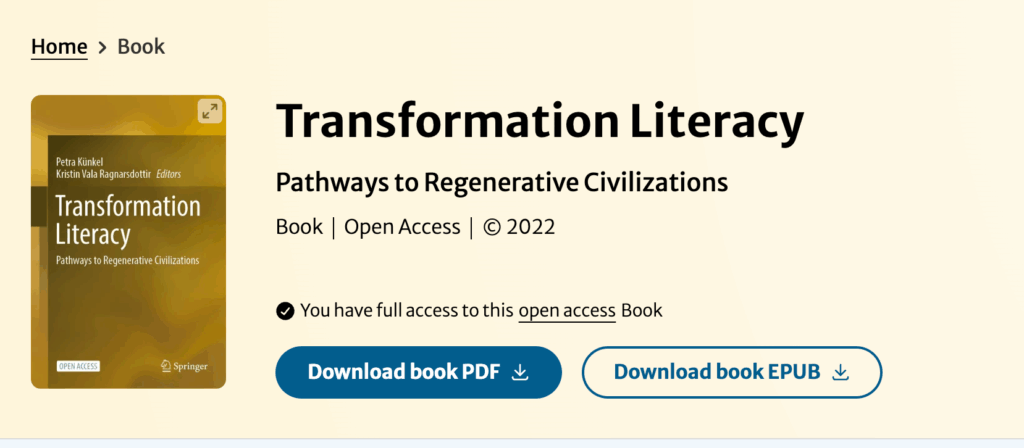
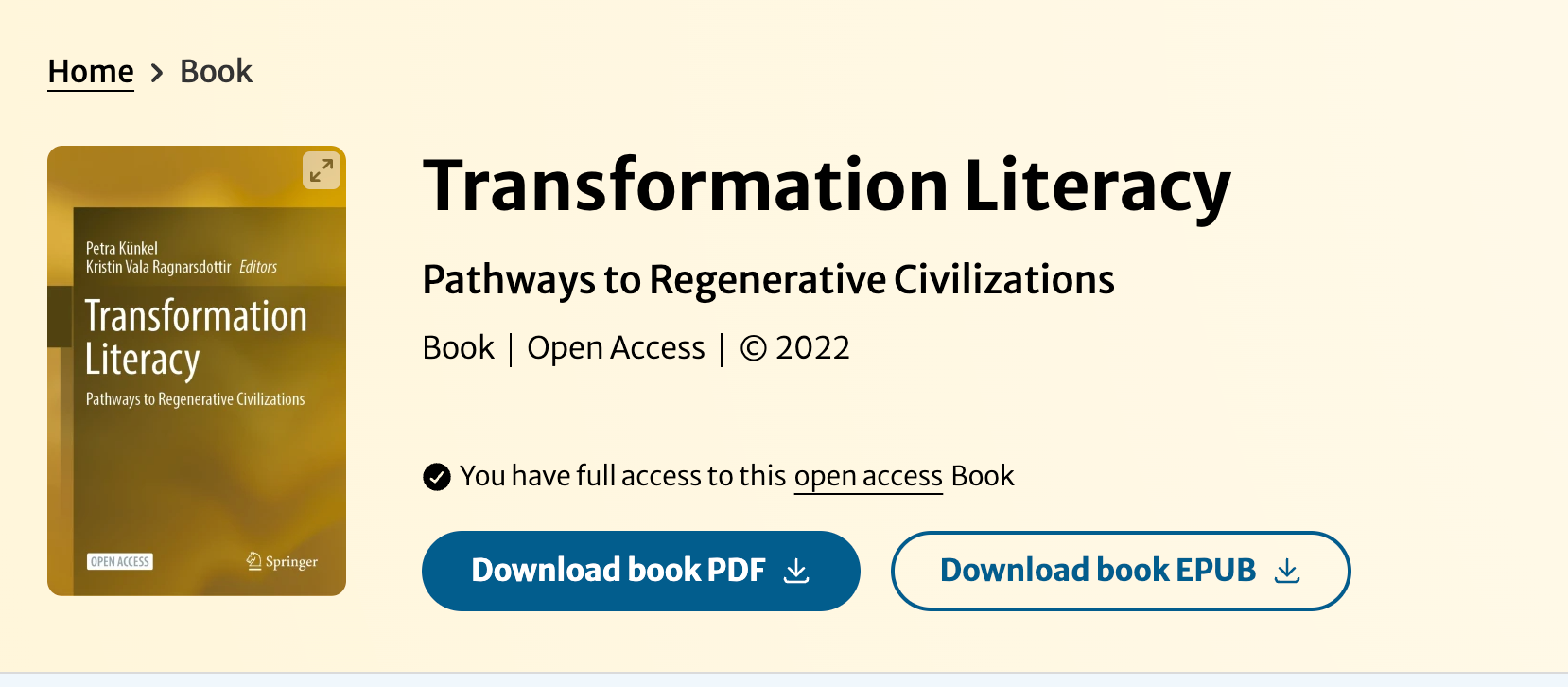
BONUS: Transformation Literacy – Pathways to Regenerative Civilizations
This bold and deeply collaborative work, Transformation Literacy, edited by Petra Künkel and Kristin Vala Ragnarsdottir, brings together more than 50 contributors to articulate a multi-pathway framework for system transformation. It introduces “transformation literacy” as a new skillset—a form of societal fluency—needed to navigate today’s complex crises and co-create a regenerative civilization. Through five pathways (collaborative, narrative, economic, integral, and nature-based transformation), the book offers tools and practices that are highly relevant for African contexts, especially in Namibia where integrated approaches to food, energy, and governance are urgently needed. Grounded in systems thinking, Indigenous wisdom, and planetary boundaries, it’s both a call to action and a practical guide for those aiming to move from fragmentation to collective regeneration.
Worthwhile videos
No videos picked for this Guide yet. Seen a good one on this topic? Tell us the link.
Keep exploring
Grassroots Economics and the Sarafu Network: A Powerful Model for Community Coordination in Kenya
Sarafu in action In the face of rising inequality, unreliable income, and limited access to money in many African communities, Grassroots Economics…
Citizen Dashboards
Citizen Dashboards: Empowering Namibian Communities for Sustainable Development Introduction Citizen dashboards are powerful tools that provide communities with accessibl…
Community savings groups: agree the rules before collecting money
A community savings group lets members organise small contributions and agreed uses of a shared fund.
Participatory Budgeting
participatory budgeting Participatory Budgeting: Empowering Namibian Communities Through Inclusive Decision-Making Introduction Participatory budgeting (PB) is a democrat…